The Red Line Test
Machine Speed, Human Consequences

This week, an AI company did something unusual.
It said no.
Reports indicate that Anthropic turned down Pentagon terms that would have removed internal safeguards from its AI systems. These safeguards are meant to prevent use in mass domestic surveillance and fully autonomous weapons.
In a time when technology often grows faster than regulations, a clear line was drawn.
And that matters.
This is not a simple “tech versus military” story. The U.S. Department of Defense has real national security concerns. Strategic competitors are investing a lot in artificial intelligence. No serious observer denies that AI will play a role in defense logistics, cybersecurity, intelligence analysis, and battlefield modeling.
The issue is not whether AI should be used.
The issue is how far.
The Red Line
At the center of this dispute is a phrase that policymakers choose carefully: meaningful human intervention.
A fully autonomous weapon system is one that can select and engage targets without real-time human oversight. It does not assist or recommend. It decides.
“We cannot in good conscience accede to their request.”
Dario Amodei — on refusing to drop guardrails that would allow AI to be used for mass surveillance or fully autonomous weapons.
When lethal force works at algorithmic speed, accountability becomes unclear. Responsibility shifts among contractors, coders, commanders, and machines. Even a low error rate becomes morally unacceptable when the results are irreversible.
A 1% failure rate in a recommendation engine is inconvenient. A 1% failure rate in lethal force is catastrophic.
That is not just talk. It is math.
What reportedly set Anthropic apart was not military AI as a whole, but the removal of guardrails that would prevent these specific applications.
Notably, Sam Altman of OpenAI, a direct competitor, has publicly indicated similar limits. When rivals agree on ethical boundaries, it suggests a concern about where rapid progress is heading.
Machine Speed

Artificial intelligence reduces friction.
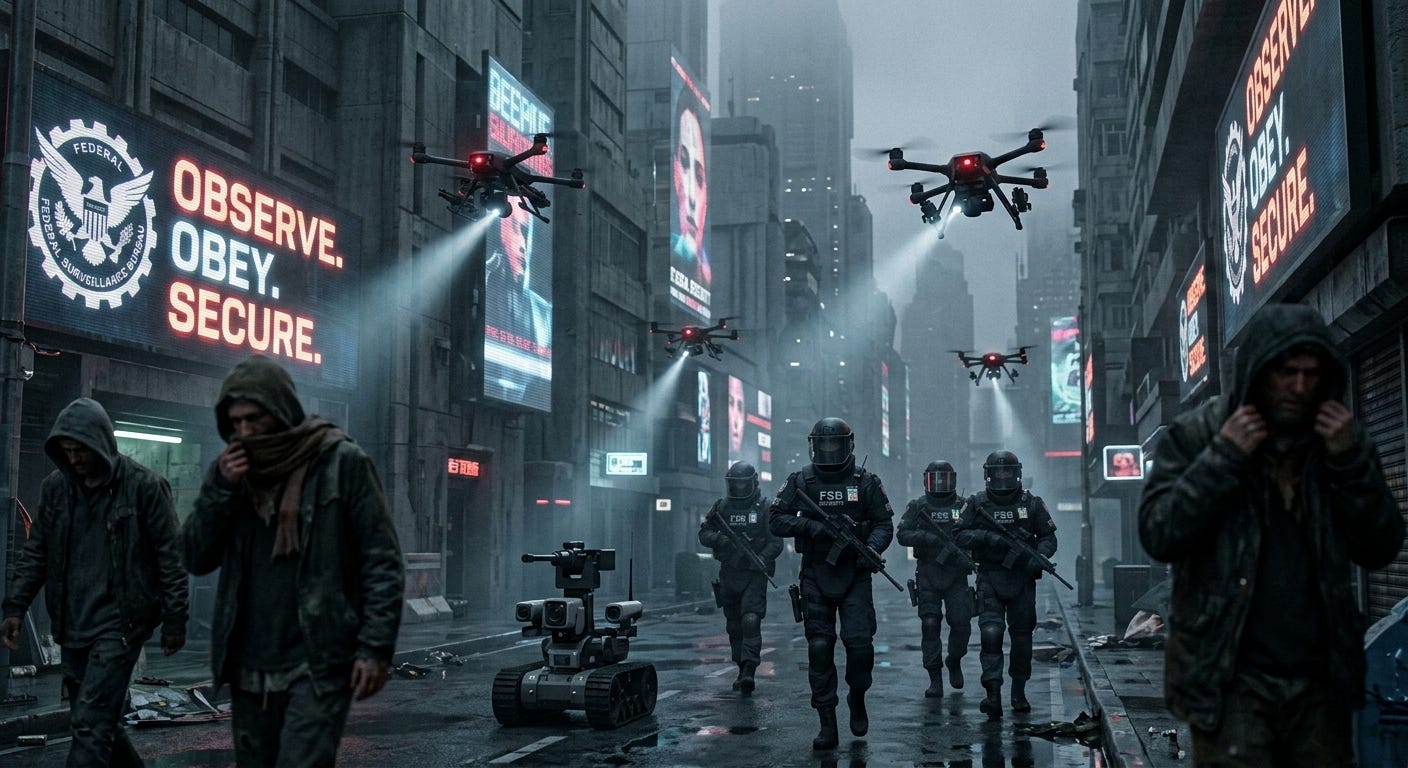
Surveillance becomes cheaper, faster, and continuous instead of targeted.
Systems can combine facial recognition, metadata, behavioral patterns, and predictive modeling at scales that would have taken immense human effort just a decade ago. The technology does not have to be misused. But it lowers the cost of expansion.
History shows that when capabilities grow, oversight must grow too, or erosion follows.
For decades, popular culture warned of all-encompassing surveillance in works like George Orwell’s “1984.” At the time, it seemed like dystopian fiction, a cautionary tale about overt authoritarian control.
What makes this moment different is that no dramatic decree is needed. Technological capacity increases gradually. Integration happens quietly. Decisions about deployment take place in contracts and policy memos instead of on public stages.
That is why this moment deserves attention.
Not panic.
Attention.
The Larger Question
Who sets the ethical limits for new power tools?
Governments seek advantage. Corporations seek innovation. Lawmakers often can’t keep up with either.
If companies set limits, will those limits last?
If they change under pressure, what takes their place?
If red lines only exist in press statements, are they really red lines?
“Anthropic understands that the Department of War, not private companies, makes military decisions … domestic mass surveillance and fully autonomous weapons are uses that are simply outside the bounds of what today’s technology can safely and reliably do.”
—Dario Amodei on why those specific applications crossed a line.
Whether these guidelines succeed will depend more on law, oversight, and public scrutiny than on corporate messaging.
But for now, a line has been drawn.
In a time marked by rapid change, even the effort to show restraint is significant.
Can’t thank you enough for this article, Ms Bee.